
5 Signature Amyris Perfume Blends for Slow Evenings
Some evenings call for a particular kind of quiet. Not silence exactly, but a slowing down. A deliberate shift from the noise of the day into something softer. Scent can do that. The right woody diffuser blend, burning low in the background, can reshape the feeling of a room before you've even sat down.
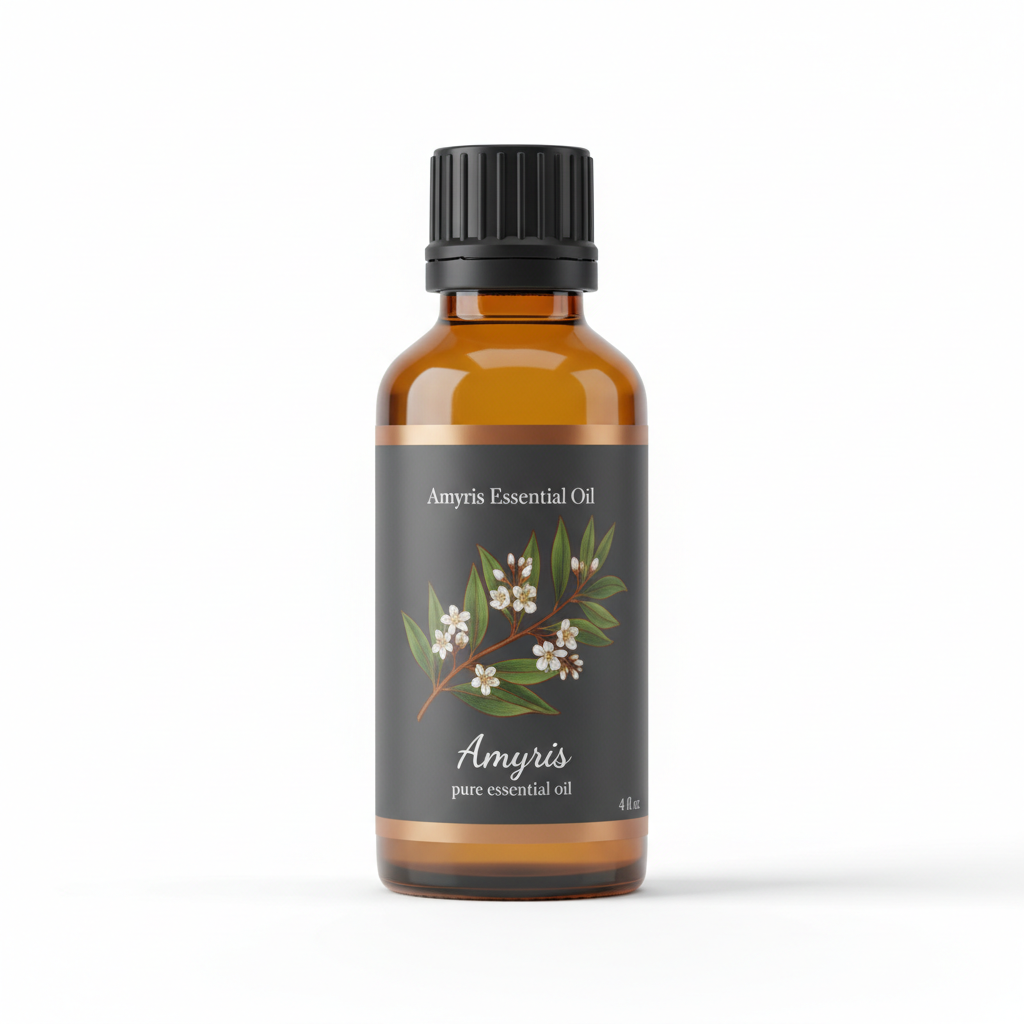
Amyris Essential Oil
Our own Amyris Essential Oil, in sizes from 0.5 oz to bulk.
From $23.99
Shop Now →Amyris (Amyris balsamifera) is one of the great unsung materials in natural perfumery. It carries a creamy, sandalwood-adjacent warmth with a faintly smoky edge, and it blends with almost embarrassing ease. It is the oil that makes other oils smell better. Pair it with the right frankincense, and you have the backbone of something genuinely beautiful.
For all five blends in this guide, the chosen frankincense is serrata (Boswellia serrata), sourced primarily from India. Here is why that choice matters.
Why Frankincense Serrata Suits Slow Evenings
Not all frankincense oils smell the same. Carterii leans bright and slightly citrusy. Sacra has a sharp, almost medicinal green edge. Frereana is dry and resinous. Serrata sits in a different register entirely.
Frankincense serrata is rounder. It opens with a mild, slightly earthy warmth and settles into a soft resinous sweetness that is never harsh. There is a woody depth to it that aligns naturally with amyris, rather than competing. Where some frankincense varieties add brightness that can feel out of place in evening blends, serrata adds weight. Substance. It grounds a blend rather than lifting it.
Serrata also has a gentler, less camphorous character than some other varieties, which makes it more approachable for personal fragrance work. When you are wearing a blend close to your skin for several hours, that matters. You can explore our frankincense serrata essential oil if you want to check the specific sourcing and GC/MS data before you blend.
If you want a broader grounding in how amyris functions within perfume structures, the Amyris in Perfumery: The Ultimate Guide covers its role as a fixative, its aroma profile, and why it punches so far above its price point.
Before You Blend: Dilution, Safety, and Patch Testing
Essential oils are concentrated. Amyris and frankincense serrata are both considered low-risk, but all undiluted essential oils should be kept away from skin, eyes, and mucous membranes. Use appropriate carrier oils or alcohol for any skin-contact application.
Dilution Guidelines
- Diffuser blends: Use oils undiluted in a water diffuser (typically 5 to 10 drops total per 100ml water). No carrier needed.
- Skin-safe perfume oil (roll-on or dab): Dilute to 2% in a carrier oil for daily use. That is roughly 12 drops of essential oil per 30ml (1 fl oz) of carrier.
- Body oil: Dilute to 1 to 1.5% for large-area skin application. Approximately 6 to 9 drops per 30ml carrier.
Patch Testing
Before applying any diluted blend to your skin, apply a small amount to the inner forearm and wait 24 hours. If you notice redness, itching, or irritation, rinse thoroughly and discontinue use. This step is not optional.
Contraindications
Avoid skin application during pregnancy without guidance from a qualified healthcare provider. Keep all essential oils out of reach of children and pets. If you have any underlying health concerns, consult a qualified healthcare provider before using essential oils on your skin.
The Core Formula: Evening Anchor Blend
Before the five variations, here is the base formula that runs through all of them. Understanding this anchor will make the variations easier to riff on.
| Ingredient | Drops (diffuser batch) | Milliliters (30ml perfume oil) |
|---|---|---|
| Amyris essential oil | 4 drops | 0.20 ml |
| Frankincense serrata essential oil | 3 drops | 0.15 ml |
| Vetiver essential oil | 1 drop | 0.05 ml |
This 4:3:1 ratio gives you a woody, resinous base with vetiver adding a faintly smoky, earthy undertone. It is complete as a diffuser blend. For a perfume oil, top up to 30ml with fractionated coconut oil or jojoba, add your preferred top notes, and you have a wearable fragrance.
The 5 Signature Amyris Perfume Blends
Blend 1: Still Water
A minimal, almost meditative woody diffuser blend. Quiet and clean.
| Ingredient | Drops (diffuser) | ml (30ml perfume oil) |
|---|---|---|
| Amyris | 4 | 0.20 ml |
| Frankincense serrata | 3 | 0.15 ml |
| Cedarwood (Atlas or Himalayan) | 2 | 0.10 ml |
| Ho wood | 1 | 0.05 ml |
Ho wood brings a soft, slightly floral woody note that keeps this blend from feeling too heavy. It is a good starting point for people newer to amyris evening blends because nothing here is challenging or polarizing.
Blend 2: Resin and Rain
Warmer and more complex. This one suits overcast evenings.
| Ingredient | Drops (diffuser) | ml (30ml perfume oil) |
|---|---|---|
| Amyris | 4 | 0.20 ml |
| Frankincense serrata | 4 | 0.20 ml |
| Petrichor accord or violet leaf | 1 | 0.05 ml |
| Patchouli (aged if possible) | 1 | 0.05 ml |
Patchouli and serrata share an earthy resinous quality that builds well together. Violet leaf or a petrichor accord adds an ozonic, almost green note that keeps the whole thing from collapsing into sweetness. This blend has staying power as a perfume oil.
Blend 3: Candlelit
The coziest of the five. Vanilla-adjacent without being sweet.
| Ingredient | Drops (diffuser) | ml (30ml perfume oil) |
|---|---|---|
| Amyris | 5 | 0.25 ml |
| Frankincense serrata | 3 | 0.15 ml |
| Benzoin resinoid | 2 | 0.10 ml |
| Cardamom | 1 | 0.05 ml |
Benzoin is thick. If you are making a perfume oil, warm your jojoba carrier slightly before combining to help it incorporate. Cardamom adds a spiced brightness at the top that lifts the heavier base materials without dominating them. This is the blend for a book and a blanket.
Blend 4: Night Garden
Floral without being feminine in a conventional sense. Interesting on all skin types.
| Ingredient | Drops (diffuser) | ml (30ml perfume oil) |
|---|---|---|
| Amyris | 3 | 0.15 ml |
| Frankincense serrata | 3 | 0.15 ml |
| Ylang ylang (extra or complete) | 2 | 0.10 ml |
| Geranium (Bourbon) | 1 | 0.05 ml |
| Black pepper | 1 | 0.05 ml |
Go carefully with ylang ylang. It is potent. Start with one drop in your diffuser batch and adjust upward only if the floral note feels too restrained. The black pepper gives the whole thing a dry, slightly sharp edge that prevents the florals from cloying. This is one of the more wearable amyris perfume blends in the set.
Blend 5: Slow Smoke
The boldest of the five. A slow-burning woody diffuser blend with a distinctly contemplative quality.
| Ingredient | Drops (diffuser) | ml (30ml perfume oil) |
|---|---|---|
| Amyris | 4 | 0.20 ml |
| Frankincense serrata | 3 | 0.15 ml |
| Vetiver | 2 | 0.10 ml |
| Guaiacwood | 1 | 0.05 ml |
Guaiacwood is soft and slightly rosy with a smoky, almost balsamic depth. Combined with vetiver and amyris, it creates a layered woodiness that does not smell like any single ingredient. It smells like a place. This blend is excellent for diffusing in a home office during the last hour of the workday when you want to signal to yourself that the evening has begun.
Step-by-Step Blending Instructions
- Gather your materials. You will need your essential oils, a carrier (for skin-contact applications), a small glass beaker or measuring cup, a glass stirring rod, and your storage vessel (amber or cobalt glass bottle with a tight lid).
- Measure base notes first. Amyris and frankincense serrata are both base-to-mid notes. Add them to your beaker before lighter, more volatile ingredients.
- Add middle notes. Cardamom, geranium, ylang ylang, and similar mid-range materials go in second.
- Add top notes last. Black pepper and other lighter materials are most volatile. Adding them last preserves their lift during the blending process.
- Stir gently. A glass rod or clean chopstick works well. Avoid vigorous shaking at this stage, particularly if you are working with resinoids like benzoin.
- Add carrier for skin-safe applications. Once your essential oil blend is combined, add your carrier oil. Stir again to incorporate fully.
- Cap and rest. Let the blend sit for 48 hours before final assessment. The ingredients need time to marry. What smells slightly discordant on day one often resolves beautifully by day three.
- Adjust if needed. Add one drop at a time if anything needs nudging. Record every adjustment in a blending notebook.
Storage and Shelf Life
Store all blends in amber or cobalt glass bottles, away from heat and direct light. A cool, dark drawer or cabinet works well. Properly stored, neat essential oil blends (without carrier) will remain stable for two to three years. Blends in jojoba oil typically last 12 to 18 months before the carrier begins to oxidize. Blends in fractionated coconut oil have a similar or slightly longer stability window.
Label every bottle with the blend name and date. It sounds basic, and it is. It also saves significant frustration six months later.
Variations Worth Exploring
Variation 1: Dry Down Deepener
Add one drop of oud (agarwood) essential oil to any of the five base blends. Use sparingly. Oud is intensely powerful and will reshape the entire character of a blend. Start with a single drop in a diffuser batch and evaluate before scaling up.
Variation 2: Citrus Entry Point
Add two drops of bergamot or one drop of yuzu to Blend 1 (Still Water) or Blend 5 (Slow Smoke). The citrus note evaporates quickly in a diffuser but creates a bright opening before the woody base notes take over. In a perfume oil, the citrus top note is perceptible for the first 20 to 30 minutes of wear.
Variation 3: Softer and Wearable
For a lighter everyday version of any blend, reduce the vetiver and patchouli quantities by half and add one drop of sandalwood (Australian or Indian) in their place. The result is warmer and creamier, leaning closer to a skin scent. This variation works particularly well as a body oil base. Our DIY Rose and Amyris Body Oil covers that format in detail if you want to explore further.
Taking These Blends Further
Perfume oils are one format. But amyris lends itself equally well to solid formats, which are portable, low-mess, and surprisingly long-lasting on skin. If you want to press any of these evening blends into a solid form, the DIY Amyris Solid Perfume guide walks through the beeswax and jojoba ratio you need along with the fill-and-set process.
Five blends is a starting point. The real discovery comes from making small batches, wearing them over a few evenings, and noticing what you reach for. Amyris in particular is the kind of oil that reveals itself slowly. The more time you spend with it, the more you appreciate its particular kind of quiet generosity. It does not announce itself. It simply makes everything around it smell more complete.