
12 Everyday Uses for Amyris Essential Oil at Home
Amyris essential oil rarely gets the spotlight it deserves. It sits quietly in the background of blends, doing its job without fanfare, and most people only encounter it through a perfumer's formulation rather than their own diffuser. But spend a little time with this soft, creamy, wood-and-vanilla oil, and you start to see why aromatherapists and DIY formulators keep reaching for it. It is affordable, widely available, blends beautifully with almost everything, and brings a depth to home routines that you genuinely notice when it is missing.
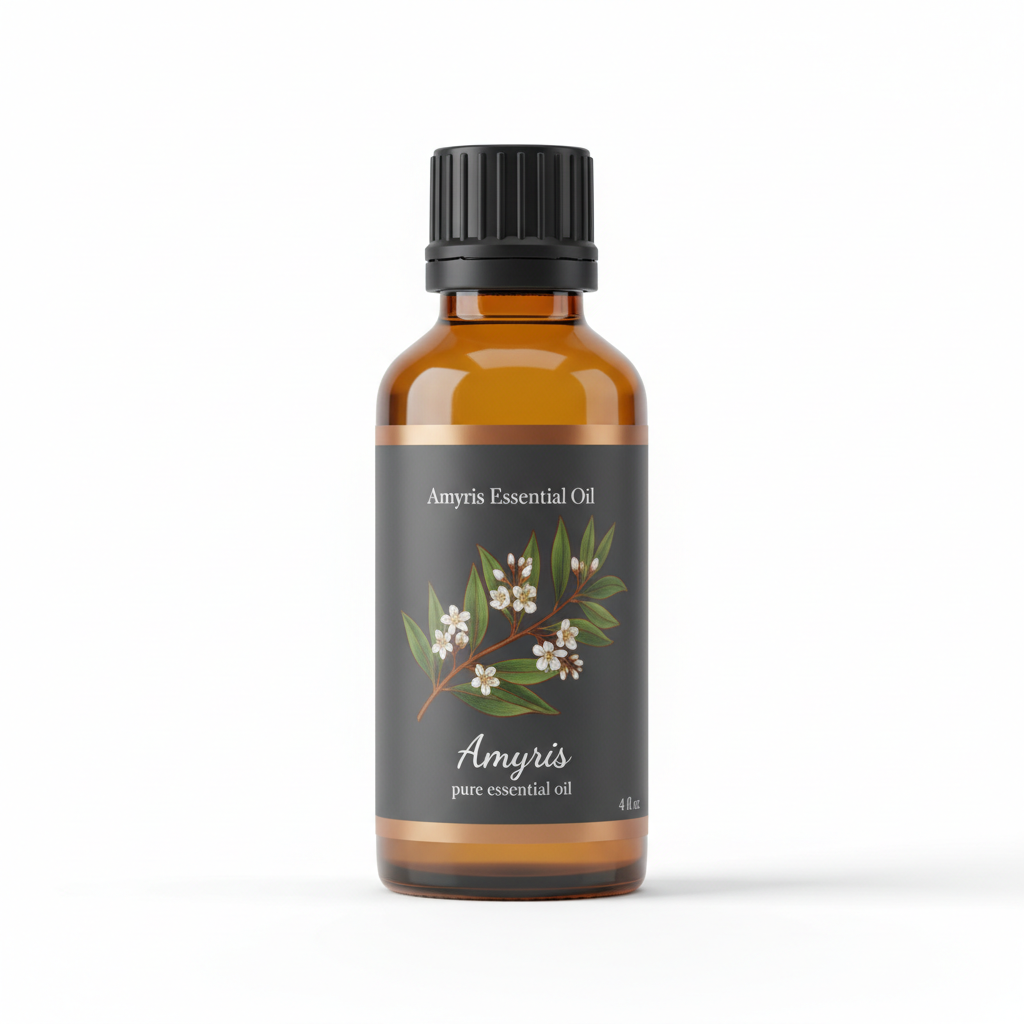
Amyris Essential Oil
Our own Amyris Essential Oil, in sizes from 0.5 oz to bulk.
From $23.99
Shop Now →If you are new to this oil, a quick orientation helps. Amyris (Amyris balsamifera) is a small tree native to Haiti and the wider Caribbean. Its oil is steam-distilled from the wood chips, which gives it a low, resinous, sandalwood-adjacent character at a fraction of the price. For a fuller picture of its botanical background and composition, the complete West Indian amyris guide is a worthwhile read before you dive in.
Below are twelve genuinely useful, everyday applications for amyris essential oil at home. Some are aromatic, some are cosmetic, and all of them are practical.
1. Evening Diffuser Blend for a Wind-Down Atmosphere
One of the most popular amyris oil uses is also the simplest: putting it in a diffuser during the hours before bed. The oil's warm, slightly sweet woodiness creates a settled, unhurried feeling in a room. It is not sharp or medicinal in the way that eucalyptus or peppermint can be. It just softens the air.
A reliable evening blend is four drops of amyris, two drops of lavender, and two drops of cedarwood. This combination layers well because all three oils share a certain stillness in their character. The amyris provides a smooth base note that keeps the blend coherent from the first hour to the last.
Practical takeaway: Start diffusing about 45 minutes before you want to begin your bedtime wind-down routine. Run the diffuser in 30-minute cycles rather than continuously to avoid scent fatigue.
2. Fixative in DIY Room Sprays
Amyris essential oil benefits DIY formulators in a very specific way: it acts as a natural fixative. Because it is rich in sesquiterpene alcohols (particularly eudesmol), it has low volatility. It lingers. When you add it to a room spray alongside brighter top notes like citrus or mint, it anchors the blend and extends how long the scent stays in the air.
A basic room spray formula is roughly 15 to 20 drops of essential oil total per 100 ml of liquid, using a base of witch hazel and distilled water at roughly a 1:3 ratio. Add amyris as four to six of those total drops, then build your top and middle notes around it. Shake before each use, since water and essential oils will separate.
Practical takeaway: If your homemade room sprays always seem to fade within minutes, try adding amyris as a fixative. You will notice the difference in longevity immediately.
3. Carrier Oil Alternative in Massage Blends
This one surprises people. Amyris is an essential oil, not a carrier, but its very low volatility and skin-safe profile mean it can be used in small amounts as part of a blended application base when combined with a true carrier like jojoba or fractionated coconut oil. It contributes scent that persists longer on skin than most essential oils would.
The key is dilution. For an adult body massage blend, the general guideline is a 2 to 3 percent essential oil dilution in your carrier. That means roughly 12 to 18 drops of essential oil per 30 ml (one ounce) of carrier. Amyris can make up a portion of that essential oil percentage. Because it is so mild, it suits sensitive skin routines well, though a patch test is always recommended before broad application.
Practical takeaway: Always dilute essential oils properly before skin contact. Patch test on a small area of inner forearm and wait 24 hours before using a new blend more widely.
4. Anchor Note in Homemade Perfume and Cologne
Amateur perfumers often struggle with base notes. Rose absolute is expensive. Real sandalwood is even more so. Vetiver can be polarizing. Amyris slides into that gap gracefully. It shares structural chemistry with sandalwood, carries a similar creamy, woody character, and costs a fraction of the price. The benefits of amyris essential oil in perfumery are largely economic as much as they are olfactory.
In a simple solid perfume, you might combine beeswax, jojoba oil, and a blend of essential oils at roughly 15 to 20 percent concentration. Amyris works well at three to five percent of the total formula, paired with bergamot, ylang ylang, or frankincense. It rounds sharp edges and makes a blend smell finished rather than raw.
Practical takeaway: When building your own scent, compose in layers. Start with your base (amyris), add your heart, then your top. Let the blend sit for 24 to 48 hours before evaluating the final dry-down.
5. Linen and Closet Sachets
Cedar blocks and lavender sachets are the classic closet companions. Amyris deserves a place in that rotation. Its woody, slightly balsamic scent is pleasant on fabric and lingers gently without being overpowering when you eventually unfold a shirt or pull out a blanket.
A simple sachet is made by adding six to eight drops of amyris to a small muslin bag filled with dried cedar shavings or unscented rice. Tie it closed and place it in a drawer, on a closet shelf, or inside a shoe. Refresh with a few more drops every four to six weeks as the scent fades.
Practical takeaway: Do not apply essential oils directly to fabric without a carrier or absorbent medium, as undiluted oils can stain. The sachet method is the safest route for closets and drawers.
6. Beard and Grooming Oil Ingredient
Amyris oil benefits extend naturally into men's grooming. Its sandalwood-like quality makes it a natural fit for beard oils and after-shave balms, where that warm, woody scent profile reads as sophisticated without being heavy. Many commercial grooming products use it precisely because it performs like a premium ingredient at a modest cost.
For a simple beard oil, combine 30 ml of jojoba oil with 30 ml of argan oil, then add 10 to 12 drops total of essential oils. A blend of four drops amyris, four drops cedarwood, and three drops black pepper creates a well-rounded scent that suits the grooming context well. The oils condition the hair while the amyris contributes a lasting, understated fragrance.
Practical takeaway: Keep essential oil concentration in facial products at or below 1 percent for sensitive skin types. The face is more reactive than the body, so err toward a lower dilution ratio.
7. Candle Fragrance Component
Candle making with essential oils is a little tricky. Many top notes burn off before they scent the room. Amyris, with its low volatility, holds up better to heat than most essential oils, making it a practical choice for scenting soy or beeswax candles. It will not perform identically to synthetic fragrance oils, but it contributes a genuine, natural wood note that synthetic alternatives struggle to replicate.
The general guidance for essential oils in candles is a fragrance load of six to ten percent by weight. For a 100-gram candle, that is six to ten grams of essential oil. Amyris can make up half that load, paired with warmer companions like cardamom, clove bud (used sparingly), or benzoin. Add your fragrance to the wax at around 60 to 65 degrees Celsius, just before pouring, to preserve as much scent as possible.
Practical takeaway: Always use candle-safe essential oils and follow candle-making safety guidelines. Conduct burn tests before making large batches, and never leave a burning candle unattended.
8. Meditation and Focus Ritual Support
Many people find that woody, grounding scents help them settle into a meditation or focused work session more easily. Amyris fits this role well. Its scent is slow and unhurried. It does not demand attention. It simply creates a sensory marker that says: this is different from the rest of the day.
Using scent as a ritual cue is a well-established practice in many cultural traditions. You might diffuse three drops of amyris and two drops of frankincense before sitting down for a morning journaling session or an afternoon block of deep work. Over time, the scent itself may become associated with that focused state, helping you drop into it more quickly.
Practical takeaway: Consistency matters more than quantity here. Use the same blend each time you want to signal a shift in attention. A small personal inhaler is a discreet way to use the scent at a desk without affecting others in shared spaces.
9. Soap Making Additive
Cold-process and melt-and-pour soapmaking both benefit from essential oils that can survive the saponification process (or the heat of a melt-and-pour base). Many oils do not. Amyris, because of its sesquiterpene content and stability, holds up reasonably well through soap production, though some scent loss is always expected.
A typical usage rate for essential oils in cold-process soap is two to three percent of the total oil weight. For a one-kilogram batch, that is 20 to 30 grams of essential oil. Amyris works particularly well in shaving soaps or men's bar soaps where that woody, sandalwood-adjacent character suits the aesthetic. Pair it with patchouli and orange for a warm, earthy bar.
Practical takeaway: Always research each essential oil's usage rate and behavior in soap before adding it to a batch. Some oils accelerate trace unexpectedly. Amyris is generally well-behaved, but test at a small scale first.
10. Lotion and Body Butter Scenting
Unscented lotions and body butters are a blank canvas, and amyris is a beautiful choice for scenting them. Because it is a base note with real staying power on skin, a lotion fragranced with amyris will retain its scent longer than one made with a citrus top note that evaporates quickly. This is one of the more practical amyris essential oil benefits for everyday cosmetic use.
For a body lotion or whipped body butter, keep your total essential oil concentration at one to two percent for normal skin, or 0.5 to one percent for products used on sensitive skin or the face. In a 100-gram batch, that is roughly ten to twenty drops total. Amyris can stand alone or blend with vanilla CO2, sandalwood, or rose absolute for a richer aromatic profile.
Practical takeaway: Add essential oils to your lotion base after it has cooled below 40 degrees Celsius. High temperatures degrade delicate aromatic compounds, and your scent will be noticeably weaker if you add oils while the base is still hot.
11. Natural Wood Polish Scent Boost
This application is less expected but genuinely useful. Some people add a drop or two of essential oil to homemade beeswax wood polishes. Amyris, being derived from wood itself, has an olfactory logic to it here. It smells like the furniture it is polishing. A small addition to a beeswax-and-oil polish gives the finished surface a subtle, pleasant scent that fades within a day without leaving any residue behind.
A simple DIY wood polish combines melted beeswax with jojoba or olive oil at roughly a 1:4 ratio (more oil than wax). Once cooled to a workable paste, stir in three to four drops of amyris per 100 grams of polish. Apply sparingly with a soft cloth and buff well. The oil itself is not a wood protectant in any meaningful sense; the beeswax does that work. Amyris is simply there for the experience of using it.
Practical takeaway: Test any homemade polish on an inconspicuous area of wood before full application. Different wood finishes react differently to oil-based products.
12. Blending Practice for Aromatics Education
Finally, and perhaps most valuably if you are building your aromatics knowledge: amyris is an excellent teaching oil. It is forgiving, affordable, and versatile enough that experimenting with it does not feel wasteful. Understanding how a true base note behaves, how it lengthens a blend, how it softens harsh notes, and how it changes over the dry-down hours, is essential knowledge for anyone serious about working with essential oils at home.
Buy a small bottle, gather a few other familiar oils, and spend an afternoon doing strip tests. Put one drop each of amyris, bergamot, and rose geranium on separate scent strips. Smell them together at one hour, three hours, and six hours. Watch the top notes vanish and the amyris remain. That single exercise teaches more about base notes than any article can. For common questions about working with this oil, the amyris FAQ is a practical starting point, and the storage and shelf life guide will help you keep your investment in good condition once you have it.
Practical takeaway: Keep a blending journal. Note the ratios you used, the date, and your scent impressions at different time intervals. Your own notes, built over months of experimenting, will become your most useful reference.
A Few Safety Notes Worth Keeping in Hand
Amyris essential oil is generally considered well-tolerated and is not associated with significant sensitization risks at normal use levels. That said, basic essential oil safety applies without exception:
- Always dilute before applying to skin. Undiluted essential oils should not contact the skin directly.
- Patch test any new blend before broad skin application. Apply a small amount to the inner forearm, cover loosely, and check after 24 hours.
- Keep essential oils away from the eyes, ears, and mucous membranes.
- Keep all essential oils out of reach of children and pets. Diffusion around pets warrants extra caution and research specific to your animal.
- If you are pregnant, nursing, or managing any ongoing health concern, consult a qualified healthcare provider before introducing new aromatic products into your routine.
- Essential oils are not substitutes for professional medical advice. If something is wrong, see a doctor.
Amyris is a quiet oil. It will not wow you in the first thirty seconds the way a bright citrus will. But give it a little time in a blend, and you will start to notice the difference it makes. That is, perhaps, the best way to describe what amyris essential oil benefits bring to a home routine: not a single dramatic moment, but a steady, reliable depth that makes everything around it smell better.