DIY Amyris Beard Oil: A Simple Woody Blend for Sensitive Skin
A good beard oil does two jobs at once: it conditions the whiskers and the skin underneath, and it gives you a scent you actually want to wear. Amyris essential oil is a quiet favorite for this because it carries a soft, woody note without the sharpness that some conifer or citrus oils bring to a blend. If you've ever reacted to a beard product with a long ingredient list you couldn't pronounce, building your own is one of the more satisfying kitchen-counter projects you can take on in an afternoon.
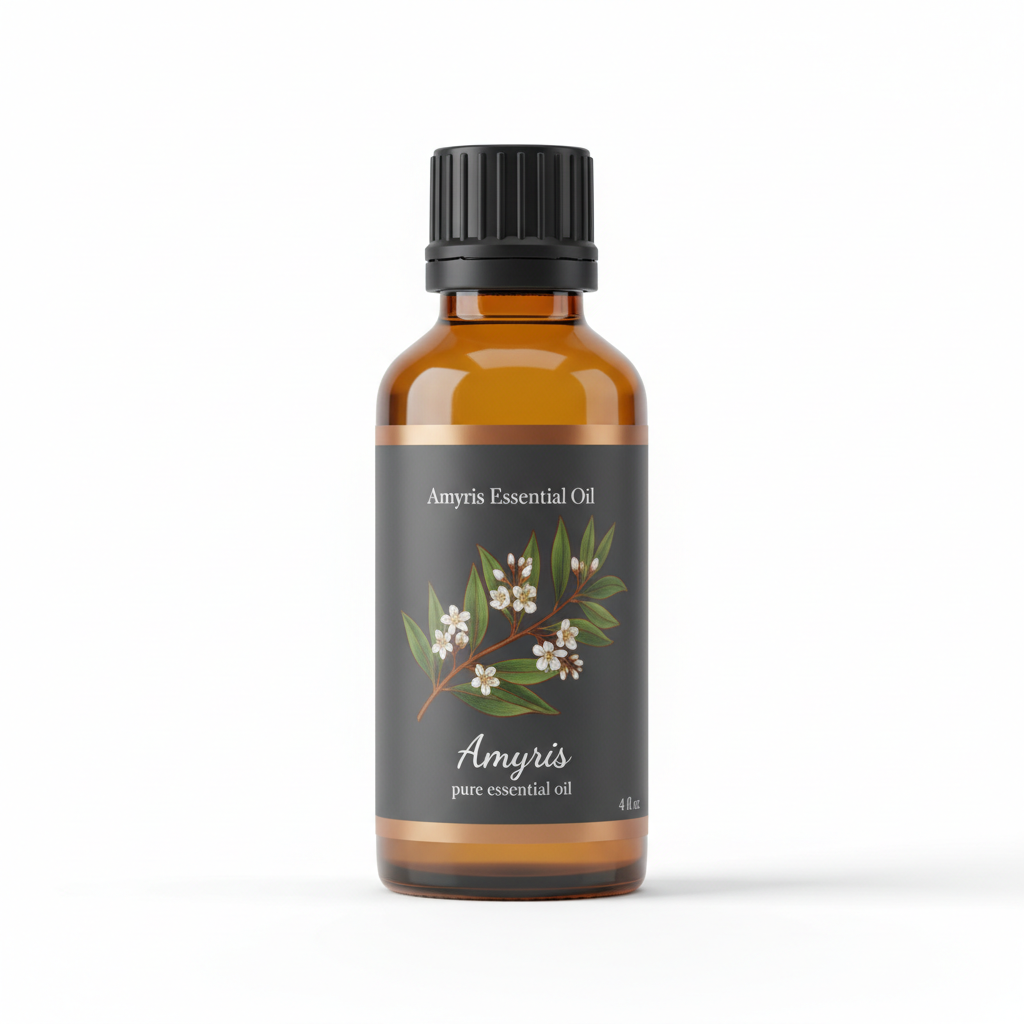
Amyris Essential Oil
Our own Amyris Essential Oil, in sizes from 0.5 oz to bulk.
From $22.99
Shop Now →This recipe is written for beginners. It uses four ingredients, takes about ten minutes to mix, and leans on amyris precisely because it's one of the gentler essential oils to work with on facial skin, when it's properly diluted in a carrier oil. Below you'll find the full diy amyris beard oil recipe, a breakdown of dilution math so you're not guessing with a dropper, and a few ways to adjust the blend if your skin or your nose wants something different.
Why Amyris Works Well in a Beard Oil
Amyris comes from a small tree native to Haiti and the Caribbean, and its oil is often described as a woody, mellow cousin to sandalwood, both in scent and in how it behaves in a blend. It's thicker than many essential oils, almost syrupy, which is part of why perfumers and formulators use it as a base note to slow down and round out sharper top notes. In a beard oil, that same quality means it blends smoothly into carrier oils and leaves a warm, low-key woodiness that doesn't compete with your morning coffee or your partner's perfume.
People also reach for amyris as a budget-conscious, more readily available substitute in a woody beard oil essential oil blend where sandalwood would traditionally sit, since true sandalwood has become harder to source sustainably at reasonable cost. That doesn't make the two oils identical (amyris is lighter and a touch sweeter), but side by side in a beard oil, most noses register them as close relatives.
Recipe Overview
- Difficulty: Beginner
- Prep time: 10 minutes
- Yield: 1 oz (30 ml), roughly a 6 to 8 week supply with daily use
- Shelf life: 6 to 9 months stored properly (see storage section below)
Full Ingredients List
This blend uses a 2% essential oil dilution, a common, moderate starting point for a leave-on facial product. If you have particularly sensitive skin, start at 1% instead (the lower-amount option is listed alongside each ingredient).
- Jojoba oil: 2 tablespoons (30 ml) – the base carrier. Jojoba closely mimics skin's natural sebum, absorbs quickly, and has a long shelf life of its own, which helps the whole blend keep longer.
- Argan oil: 1 teaspoon (5 ml) – adds a light, silky finish and softens coarse beard hair.
- Sweet almond oil or grapeseed oil: 1 teaspoon (5 ml) – a lighter-weight oil that keeps the overall texture from feeling heavy (use grapeseed if you want an even lighter finish, or if almond is a concern for you, see contraindications below).
- Amyris essential oil: 12 drops for a 2% dilution, or 6 drops for a gentler 1% dilution.
- Cedarwood essential oil (optional): 4 drops – deepens the woody character and adds a slightly drier, more grounded note.
- 1 oz (30 ml) amber or cobalt glass bottle with a dropper or orifice-reducer cap – dark glass protects the oils from light degradation.
A small glass beaker or measuring cup with milliliter markings makes the carrier oil measuring far more accurate than eyeballing it in a spoon, and a stainless steel funnel keeps the pour from turning into a countertop cleanup job.
Step-by-Step Instructions
- Sanitize your bottle and tools. Wash the glass bottle, dropper, and any beakers in hot soapy water, then let them air dry completely. Any leftover water can shorten the shelf life of the finished oil.
- Measure the carrier oils first. Using your beaker or a measuring spoon, add the jojoba, argan, and almond (or grapeseed) oils directly into the bottle, or into a small mixing beaker if you prefer to combine before pouring.
- Add the amyris essential oil. Count your drops slowly rather than tipping the bottle. 12 drops for the standard 2% version, 6 drops if you're building the gentler 1% version.
- Add the cedarwood, if using. Drop it in on top of the amyris.
- Cap the bottle and shake gently for 15 to 20 seconds. This distributes the essential oils evenly through the carrier so you're not applying a concentrated pocket to one patch of skin.
- Let it rest for 24 hours before first use. This isn't strictly required, but it gives the oils time to fully meld, and it gives you a natural pause point to do a patch test (see below) before applying the oil to your whole beard.
- Label the bottle. Write the date you made it and the ingredient list. Six months from now you will not remember the ratios, and a label makes it easy to track shelf life.
How to Use It
After a shower, while your beard is still slightly damp, dispense 3 to 5 drops into your palm (adjust up for longer beards), rub your hands together, and work it through from the skin outward to the tips. A little goes further than most people expect. Comb through afterward to distribute evenly and train the hair down.
Safety Warnings and Contraindications
Essential oils are concentrated plant extracts, and even gentle ones like amyris need to be respected as such. Please read this section before you mix or apply anything.
- Always dilute. Never apply amyris or any essential oil directly to skin undiluted. The ratios in this recipe (1 to 2%) are appropriate for facial leave-on use; do not increase the essential oil amount without understanding dilution math, and when in doubt, dilute further rather than less.
- Patch test before full use. Apply a small amount of the finished blend to the inside of your forearm, cover loosely, and wait 24 to 48 hours. If you notice redness, itching, burning, or any discomfort, do not use the blend on your face and wash the area with mild soap and water.
- Discontinue if irritation develops. If you experience any ongoing discomfort after starting to use the oil regularly, stop use.
- Pregnancy and nursing. If you are pregnant, nursing, or making this for someone who is, speak with a qualified healthcare provider before using any essential oil blend, as recommendations vary by individual circumstances.
- Children. This blend is formulated for adult use. Keep essential oils and finished blends out of reach of children.
- Nut allergy note. Sweet almond oil is a tree nut derivative. If you or anyone using this product has a tree nut allergy, substitute grapeseed oil, sunflower oil, or fractionated coconut oil instead.
- Existing skin sensitivities. If you have a known sensitive skin condition or are already using prescribed topical products, check with your dermatologist or healthcare provider before adding a new essential oil blend to your routine.
- Eye and mucous membrane contact. Avoid contact with eyes and mucous membranes. If contact occurs, flush thoroughly with a carrier oil (not water) and seek medical advice if irritation persists.
- Not a substitute for medical guidance. This recipe is offered for cosmetic and aromatic use only. It is not intended to replace advice from a qualified healthcare provider, and you should always consult one with questions about a specific skin or health concern.
A patch test takes two days and costs you nothing. Skipping it to save time is the single most common way a good recipe turns into a bad week for your skin.
Storage Instructions and Shelf Life
Store your finished beard oil in the dark glass bottle, away from direct sunlight and heat, ideally in a bathroom cabinet rather than on an open shelf near a window. Light and heat are what break carrier oils down fastest, well before the essential oils themselves become an issue.
| Ingredient | Approximate shelf life |
|---|---|
| Jojoba oil (base) | Up to 2 years unopened, 1 year once opened and blended |
| Argan oil | 12 to 18 months |
| Sweet almond or grapeseed oil | 6 to 12 months |
| Finished blend (this recipe) | 6 to 9 months, tracked from your labeled mix date |
Because the finished blend is only as stable as its shortest-lived ingredient, plan to use it up within about six to nine months. If the oil starts to smell noticeably different, sharper, sour, or simply "off" compared to when you mixed it, that's your sign to discard it and mix a fresh batch rather than keep using it past its prime.
Variations and Substitutions
Once you've made the base recipe once, it's easy to adjust:
- Deeper, more resinous woody profile: Add 3 drops of patchouli alongside the amyris for a heavier, earthier base note.
- Brighter, less heavy blend: Add 3 drops of bergamot or sweet orange for a lifted top note that softens the woodiness (skip citrus oils if you'll be in direct sun right after application, as some citrus oils carry photosensitivity considerations).
- Vetiver-forward version: Swap the cedarwood for 3 drops of vetiver for a smokier, more grounded scent that leans further from sandalwood-style woodiness and toward something earthier.
- Lighter texture for oily skin types: Replace the argan oil with an equal amount of grapeseed oil, which absorbs faster and feels less rich.
- Fragrance-free carrier swap: If you want the amyris to stand entirely on its own without cedarwood, simply omit it and add 2 extra drops of amyris in its place.
- Travel-size batch: Halve every measurement to make a 0.5 oz (15 ml) bottle, useful for testing a variation before committing a full batch to it.
A Note on Ingredient Quality
Amyris essential oil varies more in price than you might expect for how modest a bottle looks. A cheap bottle can mean the oil was cut with a solvent carrier, or that distillation quality was inconsistent. Look for a supplier who provides a GC-MS report (gas chromatography mass spectrometry) for the specific batch you're buying, not just a generic product page claim. A legitimate report shows you what's actually in the bottle, which matters more with a leave-on skin product than with, say, a diffuser blend you're only breathing in from across a room.
Frequently Asked Questions
Can I use amyris beard oil every day?
Many people who make this kind of blend for themselves apply it daily after washing. Pay attention to how your skin responds over the first couple of weeks, and scale back frequency if you notice any dryness or irritation.
Does amyris smell exactly like sandalwood?
Not exactly. Amyris is lighter, slightly sweeter, and less complex than true sandalwood, but the two share enough of the same woody character that amyris works well as a more accessible stand-in within a blend.
Is this recipe safe for beard dandruff or flaking skin?
This recipe is intended for general conditioning and scent, not for addressing any specific skin concern. If you're dealing with a persistent skin issue, talk to a dermatologist rather than relying on a DIY oil blend to manage it.
Can I scale this recipe up to make a bigger batch?
Yes. Keep the ratios the same (roughly 2% essential oil to carrier oil by volume) and scale everything proportionally. For a 4 oz (120 ml) batch, for example, you'd use about 48 drops of amyris total across your 2% target, adjusted for whichever supporting oils you're including.
A homemade natural beard oil recipe with essential oils like this one gives you control over exactly what touches your skin, and amyris earns its place in the bottle by being both easy to work with and pleasant enough to wear without announcing itself. Mix a small batch first, give it the patch test, and adjust the ratios from there until it's genuinely yours.